Meet NauticEd Instructor Mark Brown
“Even after nearly 1,400 days at sea, I’m still learning, and that’s part of what keeps it exciting.”
Tell us a little bit about yourself?
My love of sailing showed up early. As a boy in Bellingham, Washington, I rigged my mother’s bedsheet as a sail and let the wind blow me down the street on roller skates. At 17, a youth exchange to Adelaide, South Australia put me aboard a 40-foot race boat sailing to Sydney for the Sydney-Hobart Yacht Race, and I never looked back.
I studied Geography at Western Washington University while racing dinghies and coaching sailing. Years of weekly racing on Bellingham Bay followed, along with raising my two daughters who grew up as capable on the water as their dad.
Years in people-centered jobs, from real estate to driving a cab, turned out to be perfect training. My defining moment came when I realized I could teach and sail for a living, and since 2014 I have logged almost 1,400 sea days and more than 35,000 nautical miles aboard sail and power yachts up to 93 feet, from Southeast Alaska and Desolation Sound to the Sea of Cortez, Florida, and the Virgin Islands, where I once called St. John home.
I have spent more than ten weeks in the Grenadines over the years, exploring their turquoise anchorages, quiet beaches, and island villages; they remain my favorite Caribbean cruising ground (so far!). In September 2026, I sailed with returning clients from the Bay of Naples to Italy’s Pontine Islands, proof that once guests sail with me, they tend to come back.
What sets me apart is the pairing of master-level seamanship with a genuine gift for hospitality. Owners trust me with their yachts; guests remember me long after the trip. One family even made me a keepsake photo book. New owners value that I explain the why behind every maneuver, not just the how, so the confidence stays with them after I step ashore.
When I’m not at the helm, you’ll find me kite foiling in La Ventana, Baja, where I have spent eight winter seasons, cooking with whatever the local market offers, or swapping stories with friends from past charters.
Based in Anacortes, Washington, the gateway to the San Juan Islands, I bring that same warmth and expertise wherever your vessel takes you next.
Favorite Type of Boating?
Both!
What’s your “style” of boating?
Adventure (new destinations & experiences).
Favorite “type” of boating?
Coastal/Excursions.
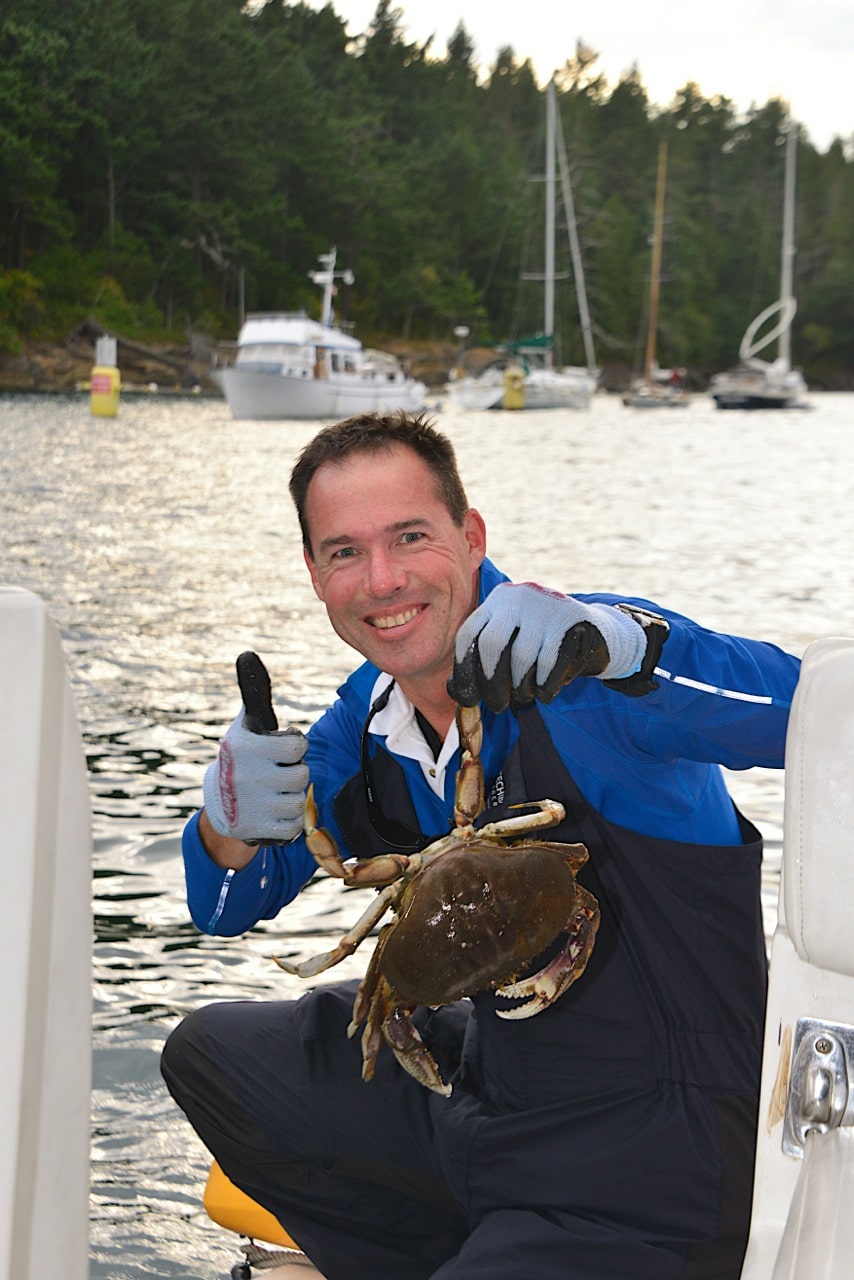
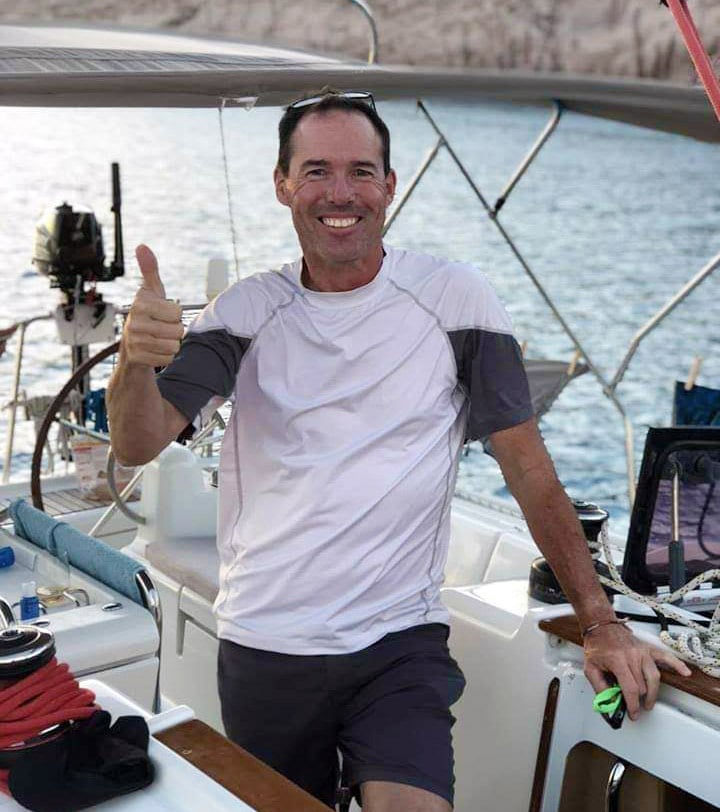
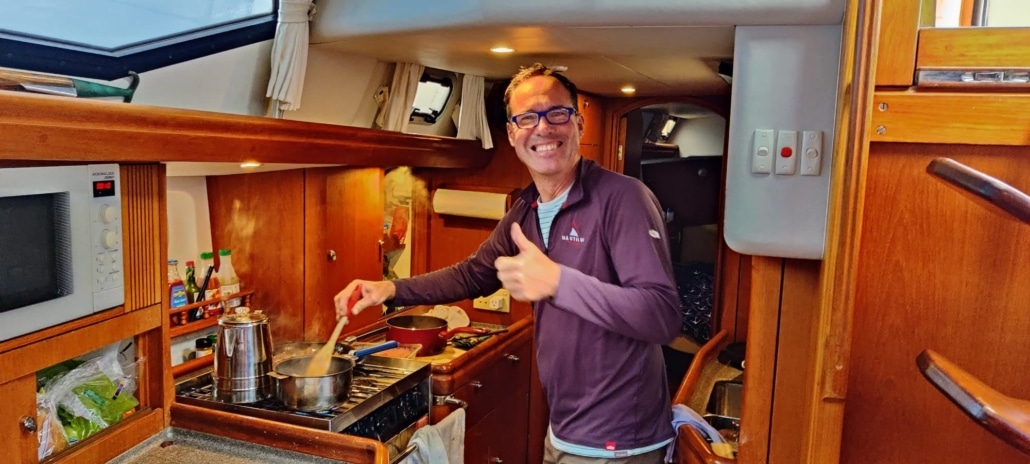
What got you into Boating?
Honestly, it started when I was a kid in Bellingham. I tied my mom’s bedsheet up as a sail and let the wind blow me down the street on roller skates. Then at 17, on an exchange year in Australia, I crewed on a race boat from Adelaide to Sydney for the Sydney–Hobart, and that was it. I’ve been on the water ever since.
What does boating do (or has done) for you?
Boating has shaped just about everything for me. It gave me a career where I get to do the two things I love most, teach and sail, and it’s taken me to places I’d never have seen otherwise, from Southeast Alaska to the Grenadines to the islands off Naples.
But more than the places, it’s the people. A week on a boat with someone builds a kind of connection you just don’t get on land. Many of my best friends began as guests or students, and some of them keep coming back year after year.
It’s also taught me a lot about myself. The water rewards patience, preparation, and staying calm when conditions change. And it’s given me a family tradition too: my two daughters grew up on the water, and that’s something we’ll always share.
Mostly, though, it keeps me present. When you’re watching the wind, reading the water, and taking care of the people aboard, everything else falls away. That’s a gift I try to pass on to every guest.
Most memorable boating experience?
One of my favorite memories started with a group of friends who’d chartered with me in the San Juan Islands. They loved it so much they asked, ‘Where can we go next?’ My chef and co-captain, Emmy, said, ‘Italy.’ So in September 2026 we found ourselves cruising the Pontine Islands, just off the Bay of Naples.
The moment I’ll never forget was anchoring off Palmarola. It’s an uninhabited nature reserve, and the cliffs rise straight out of the water in these huge basalt columns, like a cathedral built by the sea. The water was so clear you could see the anchor sitting on the bottom. We swam, explored the sea caves, and as the sun went down, Emmy brought out dinner on deck while the cliffs turned gold. Nobody said much. Nobody needed to.
The next morning we motored back to Ponza’s pastel harbor for real Italian espresso, and it hit me: these were friends who’d first sailed with me at home, and here we were discovering a whole new corner of the world together. That’s the best part of what I do.
What are a couple of your favorite boating spots?
Two spots always come to mind, one tropical and one right in my backyard.
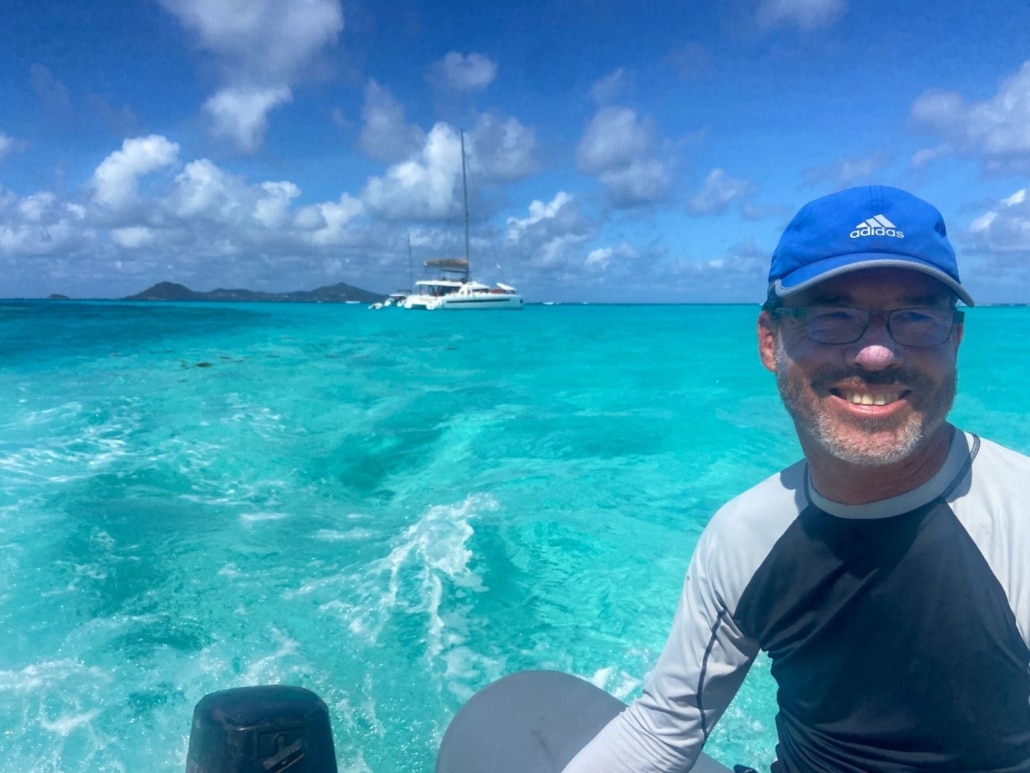
In the Caribbean, it’s the Tobago Cays in the Grenadines. It’s a protected marine park, a handful of tiny uninhabited islands ringed by Horseshoe Reef, and the water is every shade of turquoise you can imagine. One evening we were anchored in the lee of the reef, and as the light softened, turtles started surfacing all around the boat. First a few, then dozens, and before long literally hundreds, popping up for air everywhere we looked. My guests were lined up along the rail, pointing and laughing like kids. Later, local boatmen set up a lobster barbecue right on the beach. It’s about as close to paradise as I’ve found.
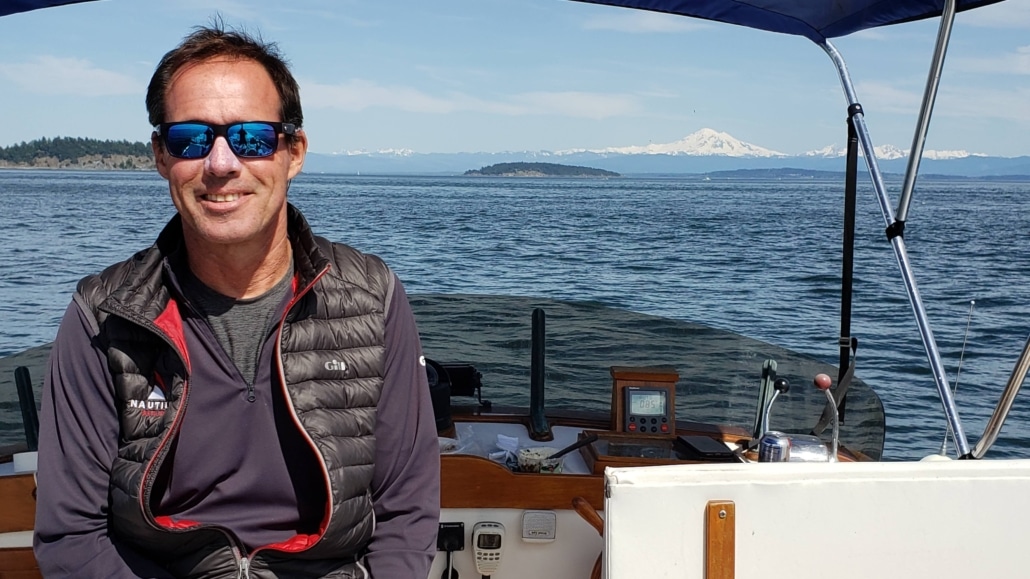
Closer to home, I love Westcott Bay on San Juan Island, just around the corner from Roche Harbor. It’s quiet and sheltered, and you can row ashore to the Westcott Bay oyster farm. One of my favorite moments as a captain is watching a guest taste their first oyster just minutes fresh from the sea. There’s always a pause, then this look of pure surprise, because it tastes like nothing they’ve ever had from a restaurant. Sitting at a picnic table with a dozen fresh oysters and the sun going down over the bay, that’s the San Juans at their best.
They couldn’t be more different, but they share what I love most about boating: places you can only really experience from the water, and the joy of watching someone discover them for the first time.
What’s your favorite part about teaching boating students?
They’ve studied points of sail, docking in a crosswind, or how to heave-to in a textbook or online course, and it all makes sense on paper. But then we’re out on the water, the wind shifts, and without me saying a word they ease the sheet, adjust the helm, and the boat settles right back into the groove. They don’t think about it, they just do it, and they understand why it worked. Watching knowledge turn into an automatic, confident action is incredibly rewarding.
The other part I love is seeing students realize that becoming a true sailor is within reach. Many people arrive thinking it’s something only lifelong boaters or naturally gifted people can do. A few days later they’re skippering the boat, making good decisions, and handling situations they never imagined they could. That shift in confidence, from ‘I could never do this’ to ‘I’ve got this,’ is what keeps me teaching.
And honestly, it’s not just a skill they’re gaining. It’s a whole new way to explore the world, and I get to be there at the beginning.
What advice would you give a new student about boating? An experienced boater?
For a new student, my biggest advice is: don’t learn everything the hard way. Most new boaters run into the same handful of problems: misjudging the wind and current when docking, not checking the weather and tides, getting overwhelmed by a boat’s systems, or feeling rushed when things don’t go to plan. None of those are failures; they’re just part of the learning curve.
But you can shorten that curve dramatically by learning alongside someone who’s already made those mistakes and figured out how to avoid them. Use my years on the water as a shortcut. You’ll be safer, more confident, and you’ll actually enjoy your time out there much sooner. And ask ‘why’ as often as you like. Once you understand why something works, it stays with you.
For an experienced boater, my advice is to stay curious. Experience is a great teacher, but it can also build habits we don’t notice anymore, some good and a few not so good. A fresh set of eyes can help sharpen your boat handling, catch small issues before they become big ones, and give you the confidence to take on new challenges, whether that’s moving up to a larger vessel, learning a new boat’s systems, or heading to waters you’ve never cruised. Even after nearly 1,400 days at sea, I’m still learning, and that’s part of what keeps it exciting.
Either way, the goal is the same: to make every trip safer, and just as importantly, more enjoyable.
What is a random fact about yourself?
Here’s one most people don’t expect: I used to be a six-figure real estate guy. Then the worldwide economic downturn of 2008 hit, the market collapsed, and shortly after I found myself driving a Yellow Cab.
It sounds like a step backward, but honestly it was one of the best things that ever happened to me. Driving a cab, you meet every kind of person, hear every kind of story, and learn how to make someone feel comfortable in the first thirty seconds. That turned out to be perfect training for being a charter captain.
More than that, it gave me the chance to ask what I really wanted to do with my life. In my mid-forties, I realized I could teach and sail for a living, the two things I love most. Making a true mid-life course change was scary at the time, but looking back it was amazing. It’s proof that it’s never too late to change tack and head somewhere better.
What’s on your boating ‘bucket list’?
At the top of my bucket list is the Seychelles.
It’s a scattering of islands in the middle of the Indian Ocean, and it looks like nowhere else on earth. Instead of the low coral cays I know from the Caribbean, many of the islands are granite, with enormous smooth boulders tumbling right down to white sand beaches and impossibly clear water. Places like Anse Source d’Argent on La Digue are about as beautiful as a beach can get.
What draws me as a sailor is the island-hopping. The main islands of Mahé, Praslin, and La Digue sit close enough together for easy day sails, with quiet anchorages tucked between them. You could spend one day hiking through the Vallée de Mai on Praslin, an ancient palm forest that’s home to the famous coco de mer, then sail over to Curieuse Island to walk among giant tortoises, some of them older than anyone aboard. The snorkeling and diving are world class, and the fresh fish and Creole cooking would make every evening at anchor something to look forward to.
The sailing itself has a rhythm I’d love to experience: steady trade winds for much of the year, with calmer transition months in between. I’d love to take a group of past guests there someday, the kind of people who’ve sailed the San Juans and the Grenadines with me and are ready for something truly far-flung.
It’s one of those places that feels like the edge of the map, and that’s exactly why it’s on my list.