Do You Need a Sailing License for Bareboat Chartering? Caribbean vs. Mediterranean Explained
Thinking about bareboat chartering on your next sailing vacation? Whether you need a license, a resume, or both depends entirely on where in the world you plan to sail. Here’s a clear breakdown of what charter companies actually require – and which credential gives you the strongest chance of getting on the water without any surprises.
Resume vs. License: What’s the Difference?
When you approach a bareboat charter company, they need assurance that you can safely handle their vessel – and that their insurance company is satisfied. Charter companies typically require one of two things: a sailing resume, a sailing license, or in some destinations, both.
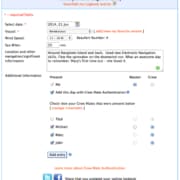
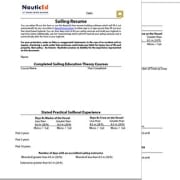
A sailing resume is a documented record of your experience. It includes any theory courses you’ve completed, sign-offs from a certified instructor, and a log of your time on the water. It’s essentially proof of what you’ve done and learned.
A sailing license is a formal credential issued by a recognized authority that certifies you’ve met a defined standard of competency.
The Caribbean: Resume Is Usually Enough
If you’re planning to bareboat charter in the Caribbean, most charter companies do not require a formal sailing license. A well-documented sailing resume is typically all you need to get approved.
Your resume needs to show that you’ve put in the time, completed relevant coursework, and received sign-offs from a qualified instructor. Charter companies in the Caribbean use the resume to evaluate your experience level and decide whether you’re a safe and insurable operator of their vessel.
Key takeaway: For Caribbean chartering, focus on building a strong sailing resume – document your courses, instructor sign-offs, and sea time carefully.
The Mediterranean and Seychelles: License + Resume Required
Sailing regulations are stricter in the Mediterranean and in destinations like the Seychelles. In these locations, you will need both a recognized sailing license and a solid resume.
There are several licenses that are accepted in these regions:
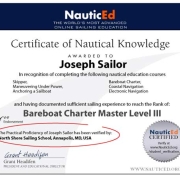
SLC (Sailing License and Credentials)
The SLC is the license that some schools in North America are authorized to issue. One important advantage of the SLC is that it is directly tied to your resume – the software used to issue the SLC will not generate the license unless you already have a charter-ready resume. This means holding an SLC is strong evidence to a Mediterranean charter company that your experience is legitimate and sufficient.
ICC (International Certificate of Competence)
The ICC is issued by the Royal Yachting Association (RYA) and by certain other countries. It is worth noting that neither the United States nor Canada can issue the ICC. This is because the U.S. and Canada did not sign Resolution 40, the international agreement that created the ICC. Sailors in North America therefore cannot obtain the ICC through a domestic school.
IPC (International Proficiency Certificate)
The IPC is issued by ASA (American Sailing Association) and US Sailing. While widely recognized, the IPC has occasionally been turned down by Mediterranean charter companies – not because of the license itself, but because of what the accompanying resume may show.
For example, some sailors complete an intensive “Zero-to-Hero” program over seven days with an instructor and receive an IPC at the end. The problem goes beyond what the charter company thinks of your resume. Seven days on the water with an instructor does not make you a competent skipper – full stop. No matter what anyone tells you about these programs, the skills and judgment required to independently captain a vessel take significantly more time and experience to develop. Attempting to bareboat charter after a Zero-to-Hero program wouldn’t just be a credentialing problem – it wouldn’t be a safe or enjoyable experience for anyone on board. The Mediterranean charter companies who turn these applications away are not being unreasonable; they’re being accurate.
Key takeaway: For the Mediterranean and Seychelles, a license alone is not enough. Charter companies evaluate both your license and your resume. A thin resume can result in being turned away or required to charter with a paid instructor.
Why the SLC Is the Superior Choice for North American Sailors
For sailors based in North America, the SLC is not just a good option – it is the strongest credential you can hold for international bareboat chartering. Unlike the IPC, which can be issued after a short program and leave you with a license that doesn’t match your resume, or the ICC, which Americans and Canadians cannot obtain at all, the SLC is built differently from the ground up.
The SLC cannot be issued unless you already have a charter-ready resume. The license and the resume are validated together by the issuing software, which means a charter company reviewing your application sees a credential that is fully backed by documented experience. There is no gap between what the license claims and what your resume shows – the two are intentionally aligned.
This is exactly what Mediterranean and Seychelles charter companies are looking for. It removes the most common reason sailors get turned away or forced to hire a paid skipper. If your goal is to arrive at the charter base and get on the water without complications, the SLC is the credential that makes that happen. For North American sailors, it is the bulletproof choice.
For more information on the SLC and how to obtain it, check the description link in the original video.
****
Frequently Asked Questions
Do I need a sailing license to bareboat charter in the Caribbean?
In most cases, no. The Caribbean generally requires a sailing resume rather than a formal license. Your resume should document your completed courses, instructor sign-offs, and sea time.
Do I need a sailing license to charter in the Mediterranean?
Yes. The Mediterranean requires both a recognized sailing license and a sailing resume. Accepted licenses include the SLC, ICC, and IPC, though the strength of your resume matters just as much as the license itself.
What is a sailing resume?
A sailing resume is a documented record of your sailing background – including theory courses completed, sign-offs from certified instructors, and logged sea time. Charter companies and their insurers use it to assess whether you are qualified to handle their vessel independently.
Can Americans get an ICC?
No. The United States and Canada did not sign Resolution 40, the agreement that established the ICC. As a result, sailing schools in the U.S. and Canada are not authorized to issue the ICC. American sailors must pursue alternative licenses such as the SLC or IPC.
What is the difference between the SLC, ICC, and IPC?
The SLC is issued by certain authorized schools in North America and is tied directly to a charter-ready resume. The ICC is issued by the Royal Yachting Association and select other countries, but not available to U.S. or Canadian sailors. The IPC is issued by ASA and US Sailing. All three are accepted in the Mediterranean and Seychelles, but the accompanying resume can make or break your charter application regardless of which license you hold.
Why might an IPC be turned down by a Mediterranean charter company?
Charter companies review your resume alongside your license, and if your only logged experience is a 7-day Zero-to-Hero program, that raises a red flag – and rightfully so. Regardless of what these programs promise, seven days on the water with an instructor does not produce a competent skipper. The skills, judgment, and situational awareness required to captain a vessel independently take real time to develop. A charter company turning down that application isn’t being overly strict – they’re being honest about what the experience level actually is. And beyond the credentialing issue, attempting to bareboat charter at that level wouldn’t be a fun trip. It would be a stressful and potentially dangerous one.
What is the best sailing license for North American sailors who want to charter internationally?
For North American sailors, the SLC is the superior choice – and it’s not particularly close. Because the SLC cannot be issued without a charter-ready resume already in place, it gives charter companies in the Mediterranean and Seychelles confidence that your credentials and experience are fully aligned. The IPC can be issued without that same standard being met, and Americans and Canadians cannot obtain the ICC at all. The SLC removes the guesswork and gives you the strongest possible application.
Do I need a license to charter in the Seychelles?
Yes. Like the Mediterranean, the Seychelles requires both a recognized license and a sailing resume. The same licenses – SLC, ICC, and IPC – apply.
###