How does heeling angle create airfoil shape?
A student asked this question “How does heeling angle create an airfoil shape in the sails”. He was using SeaTalks nanoforum that we have on every page of our sailing courses.
So my first thought was Huh? What the heck is he talking about? Then I remembered that I wrote that. So it must be right, right?
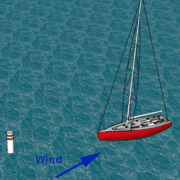
Well, it is true – sort of. On very, very and I mean very, light wind sailing days, the sail just hangs down because there is not enough wind to push the sail out to create any shape in the sail. But if you heel the boat over …
I’ll explain with a story: He is how we won a sailing race one day. About halfway through the race, the wind died. Dead, non-existent, nothing, nada. The whole fleet was becalmed. Our tactician lit a cigarette and watch the smoke go straight up in the air – but it turned slightly to starboard as it rose. He asked all of us to quietly and without any obvious commotion so as not to alert the other boats – to move to the starboard side of the boat to heel it over. The sail draped out the starboard side accordingly. This gave the sail just enough shape to move us foward every so slightly – seemingly drifting. But moving none the less through a bewildered fleet. We moved out in front enough so that as the wind came back we were far enough out to hold our position and win the race.
So – heeling angle DOES create an airfoil shape!