How to Build a Sailing Resume for Bareboat Charters
Certification is great, but it’s not enough!
Many sailors spend time and money earning sailing certifications, expecting them to open the door to bareboat charters. While certifications are valuable, they are rarely the deciding factor for charter companies. The first thing virtually every charter company will ask for – without exception – is a sailing resume.
You can show up with the most respected certification in the world, and the charter company’s response will still be: “Great – now can we see your resume?”
| Bottom line: A sailing resume is the single most important document you need before approaching any charter company. Without one, you are unlikely to be approved for a bareboat charter. |
What Is a Sailing Resume?
A sailing resume is a factual, organized record of your personal boating history. It documents everything relevant about your on-the-water experience and gives charter companies the evidence they need to trust you with their vessel.
A complete sailing resume typically covers:
- Any formal sailing courses you have completed
- Sign-offs or endorsements from qualified sailing instructors
- Your overall on-the-water experience – in as much detail as you can recall
What Counts as “Experience”?
Experience on your sailing resume is not just about the number of hours on the water – it’s about the type of time you have logged. Charter companies want to understand the breadth and depth of what you have done. Relevant details include:
- Type of vessel: Was it a monohull or a catamaran?
- Propulsion: Was it a sailing boat or a powerboat?
- Size of the boat: What was the length overall?
- Your role: Were you the skipper in command, or were you crew?
Each of these details tells a story about your competence and readiness. A charter company evaluating your resume will look at all of these factors together to form a complete picture.
How to Build Your Sailing Resume
The idea of building a resume from memory can feel overwhelming – especially if you have been sailing for years without keeping a formal log. Here is a practical approach that works:
1. Start with the most recent and work backwards
Begin with the sailing you have done most recently, since that is what you will remember best. Then work backwards in time, listing each trip or experience as accurately as you can.
2. Use approximate dates – but be honest
You are not expected to remember the exact date of every sail. Approximate dates are perfectly acceptable on a sailing resume. The key is that every entry must be your honest best recollection. Think of it this way: in the unlikely event of an inquiry or legal proceeding, you must be able to say with confidence, “Judge, this was the best I could do given my memory” – and that is entirely acceptable, as long as you have been genuinely truthful.
3. Record it in a structured format
A simple spreadsheet works well for this. For each entry, capture the approximate dates, vessel type, boat size, your role (skipper or crew), and any other relevant notes. Once assembled, this becomes the foundation of your charter-ready resume.
| Important: Never exaggerate entries on your sailing resume. If an accident occurs and your resume comes under scrutiny, you do not want to be in a position where you must admit – under oath – that you inflated your experience. Accuracy and honesty protect both you and the people on your boat. |
The Easy Way: Build Your Resume with NauticEd
NauticEd offers a free resume-building tool designed specifically for sailors preparing for bareboat charters. You can sign up for a free account and begin logging your experience immediately.
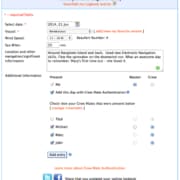
The software walks you through the process step by step. You enter your dates, boat details, role, and other information – and the tool automatically generates a polished, charter-ready resume. The finished document organizes your experience into clear time windows: the last 2 years, 5 years, and 10 years, and breaks it down by whether you were skipper or crew, and by boat type (sail or power).
The result is a single, professional document that charter companies recognize and trust – one that presents your experience clearly and completely without requiring you to format anything yourself.
****
Frequently Asked Questions
Do I need a sailing certification to charter a boat?
A certification is helpful and often required, but it is not sufficient on its own. Almost every charter company will also ask to see a sailing resume that documents your real-world experience. Think of the certification as a minimum threshold and the resume as the document that actually gets you approved.
What is a sailing resume?
A sailing resume is a structured record of your personal boating history. It lists the boats you have sailed, your role on each (skipper or crew), the type and size of each vessel, any courses completed, and any instructor sign-offs you have received. It gives charter companies the evidence they need to assess your competence.
What if I don’t remember the exact dates of my sailing trips?
Approximate dates are acceptable. The recommended approach is to start with your most recent experience and work backwards in time, doing your honest best to recall what you can. A resume based on your genuine best recollection is entirely legitimate – the critical thing is that you are truthful and do not exaggerate.
What information should be included in a sailing resume?
Your sailing resume should include: dates (approximate is fine), the type of vessel (monohull, catamaran, powerboat), the size of the boat, your role (skipper or crew), any sailing courses completed, and any instructor endorsements or sign-offs you have received.
Can I build my sailing resume for free?
Yes. NauticEd offers free resume-building software through their website. You create a free account, enter your experience, and the tool produces a professionally formatted, charter-ready resume. It automatically organizes your history into time-based summaries (2, 5, and 10 years) broken down by role and vessel type.
Is it okay to exaggerate experience on a sailing resume?
No – and this is strongly advised against. A sailing resume is a serious document. If an accident occurs and the resume is examined in a legal or insurance context, any exaggeration could expose you to serious liability. Only include experience you can honestly stand behind.
Does experience as crew count on a sailing resume?
Yes. Time spent as crew is valid and valuable experience. Charter companies want to understand the full picture of your time on the water – including both your time as skipper and your time sailing as a crew member. Both roles should be listed separately so the charter company can see the complete breakdown.
###